Office clearance
Office Clearance in London That Pays You Back
Office clearance across London that starts with what your furniture is worth. We assess the floor, buy the stock with resale value, deal responsibly with the rest, and give you one contractor, one date and one set of paperwork.
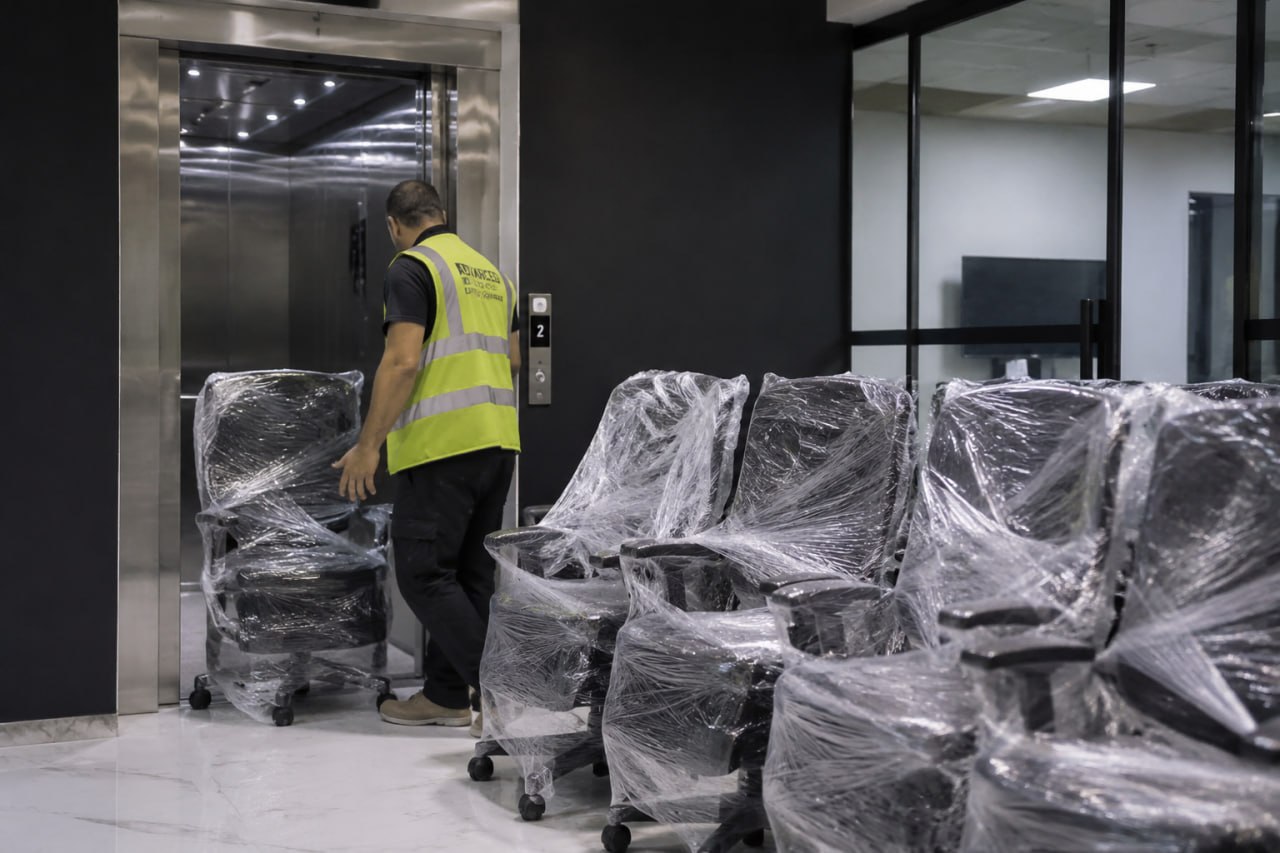
Traditional office furniture clearance is priced by volume. The contractor counts loads, quotes a figure, and everything goes out of the door at the same rate whether it is a damaged pedestal or a two-year-old ergonomic task chair worth several hundred pounds. It is quick, it is simple, and it quietly writes off assets your business paid for.
We start at the other end. Before we price anything, we survey the floor and separate what has a second life from what genuinely doesn't. The resaleable stock is bought from you at a fixed price. That value is then set against the cost of clearing everything else — and on floors with a decent proportion of branded seating, that offset regularly wipes out the clearance cost completely.
We handle whole floors and whole buildings: task and meeting seating, desks and bench systems, height-adjustable frames, pedestals and storage, meeting tables, soft seating, screens, lockers, reception furniture and the general contents left behind at lease end. Where you need it, we also coordinate the removal of IT waste and dispose of it through licensed WEEE channels.
Seating is where our attention goes first, because it is where the recoverable value sits. Herman Miller, Steelcase, Humanscale, Vitra, Orangebox, Senator and similar brands are priced individually rather than lumped into a load. If your project is mainly seating, you may want our sell used office chairs service instead, which is a straight purchase with no clearance element at all.
- Initial enquiry. Tell us the address, the floor area, your target date and roughly what is in the space. Photos or a furniture schedule speed things up but are not essential.
- Site survey. We walk the floor, grade the furniture, count the resaleable lines and check the logistics: lift sizes, loading bay access, dock booking windows, floor protection requirements and permitted working hours.
- Written proposal. You get one document showing the value we are paying for the stock we are buying, the cost of clearing and recycling the remainder, and the net position. If that net position is in your favour, we pay you. If it isn't, you can see exactly how much the furniture has offset.
- Sign-off and scheduling. Once approved, we supply RAMS, insurance and operative details for building management, and lock in the date.
Clearances rarely happen in office hours, and we plan for that. Evening, overnight and weekend shifts are standard for us, and we are used to working around live floors, staggered departmental moves and phased handovers where only part of the space is released at a time.
On the day our team protects lift lobbies and circulation routes, dismantles where required, wraps and loads, and leaves the floor swept and ready for inspection. Upon request we can supply a collection note itemising what left the building, waste transfer paperwork for anything handled as waste, and a reuse and recycling summary — enough for most facilities teams to close out both the asset write-off and the landlord's dilapidations requirement.
Office chair disposal is the part of a clearance most likely to end badly for the environment. A task chair is a mix of steel, aluminium, foam, mesh and plastics that is awkward to separate, so in a volume clearance it tends to go straight into general waste.
Every chair we take is triaged. Anything sound goes back to our workshop to be cleaned, tested and repaired for resale to smaller businesses, charities and start-ups. Chairs that are beyond economic repair are stripped for gas lifts, castors, arms and mechanisms that keep other chairs in service, and only the residual materials are sent for recycling through licensed facilities. Landfill is the last resort, not the default — and we can evidence the split when your sustainability team asks.
Chairs with a single fault — a sinking seat, a broken castor — are often worth more repaired than cleared. Our sister company London Chair Repairs fixes office and ergonomic chairs on-site across London. Not sure which route fits? Read our guide: should you sell, repair or scrap your office chairs?
We cover the City, Canary Wharf, the West End, Shoreditch and Old Street, Southwark and London Bridge, Hammersmith, Croydon, Stratford and the wider M25. Multi-site portfolios can be handled under one scope with a single point of contact. If you would rather talk it through than fill in a form, our contact page has direct details, or call us on 020 8226 0400.
Get a free valuation
Tell us the site, the date and roughly what's in the space — we'll survey it and come back with the value of the stock and the net cost of the clearance.
FAQ
Office clearance in London — common questions
It depends on the mix. Where a floor holds a good proportion of resaleable branded furniture, the resale value often covers the labour and transport entirely, and some clearances end with a payment to you rather than an invoice. Where the stock is mostly low-value or damaged, you receive a fixed price for the clearance with the recovered value already deducted, so you can see exactly what the furniture is offsetting.
A single floor is typically cleared in one day or one night shift. Larger multi-floor projects are phased around your lease end or handover date. We can usually attend site for an assessment within a few days of your first call, and once the scope is agreed we work to your date rather than ours.
Yes. Seating is the part we specialise in. Chairs in resaleable condition are bought and refurbished for reuse, and anything beyond repair is stripped for parts or sent for material recycling through licensed facilities. Nothing goes to landfill by default, and we can evidence where it went.
Upon request. We can supply a collection note listing what left the building, waste transfer documentation for anything handled as waste, and a reuse and recycling summary showing diversion rates for ESG and Scope 3 reporting. RAMS, insurance certificates and operative details are supplied in advance for building management sign-off.
Yes. Evening, overnight and weekend working is standard for central London clearances. We plan around the loading bay booking, goods lift permit and dock window the building allows, so the work happens away from occupied hours and staff.